Being lazy made me a better designer
I'm a lazy designer. There, I said it.
Years ago, before Figma had auto-layout or Sketch had smart spacing, I couldn't be bothered to meticulously align my components. Why rename layers? Why perfect the spacing? I knew that even with pixel-perfect designs, I'd still need to sit beside an engineer, annotating and tweaking. That felt like wasted effort.
So I learned to code instead. I want to control styling directly.
HTML & CSS: The First Escape
I started building layouts in HTML and CSS. I could hand off code—the most accurate spec possible. Adding class="btn btn-primary" let me permutate button variants instantly. Way faster than designing them individually.
Then I discovered SASS. Mixins. Nested CSS. I could stop repeating myself. It felt like magic, even if I didn't feel "legit." But at least my designs looked right in browsers.
The Messy Middle
I tried building my portfolio with WordPress and Jekyll. It was brutal. I haven't wrap my head around JavaScript, I was supposed to learn Liquid templating too? And then there was Angular and React, and I had no idea what to focus on. Fixing bugs ate hours I should've spent designing.
That terrified me. Now I wasn't a legit designer or engineer. But I loved building things. So I went to a software engineering bootcamp to learn Javascript, React, Git, Bash and Node, to feel more legit engineering wise.
I continue to explore style guide driven development. I will make a /styleguide on my designs and get the engineers to follow my "design" in that page. We were shipping so quickly, I couldn't have nice Figma mocks, its always low to mid fi designs.
Finding My Groove
I continue to practise React by cloning Airbnb (like everyone else). Then Gatsby and Next.js arrived and suddenly building portfolio and landing sites became so much easier.
And then I learnt Tailwind CSS. It made revisiting projects easier, I no longer need to remember how I structure and name my classes. I also don't have to set up color systems from scratch. Writing utils classes became second nature. Blazing fast implementation!
The "lazy" impulses kept driving me forward:
I wanted to tweak all color stops at once → built a color tool
I was tired of changing data manually → built a Figma plugin
And still I didn't feel like a legit designer or engineer.
The AI Acceleration
Then ChatGPT launched. I was ecstatic. I could describe what I wanted to build and copy-paste code.
Cursor made it even better. I could highlight code sections and describe changes. Send mocks in chat and get implementations. But I still needed to understand props, data flow, types, and which files to include for context. I could now build near perfect prototypes and projects close to the one in my head. With this, I could build my responsive text styles generator.
Then Claude Code arrived. Now I can prompt at an abstract level—describe the what and why—and it handles the implementation. It's transformative. I can just set up shadcn and build flows in the matter of minutes. Using claude code & cursor, I built this font pairing app in 2 weeks
Right tools for the job
I'm still a lazy designer. Every lazy impulse has made me better at shipping work that matters.
Granted, learning the code part actually takes much more time than just shifting pixels. But, with each project, I learnt to leverage each of these skills a little better, I think in systems and set up foundational flows faster.
Also, I make good mocks now, because the tooling has improved so much. With auto layout and a good design system, we no longer need to manually move elements pixel by pixel. I get to choose the right tool for the scenario — whether it makes more sense to straight to code, or I should test different layouts and styles in Figma.
Building my vision
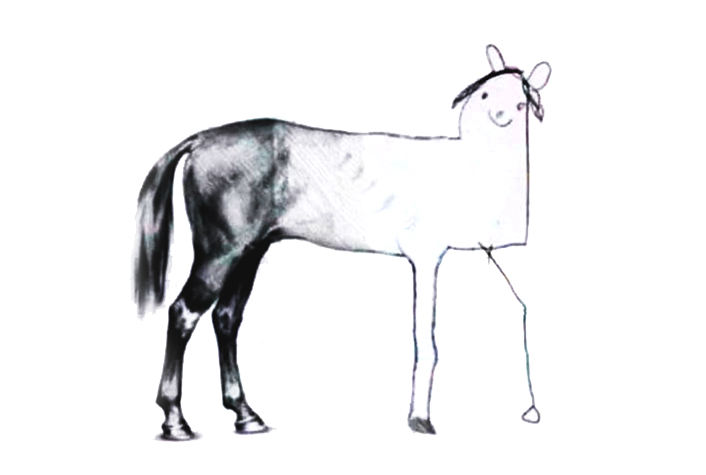
We have seen this horse. We can imagine a vision of something but what we build is always a much lesser version of that.
I want to be a designer that can build anything I imagine. It is also in my blood to improve my craft and optimise my workflow. I think the next leap is promptable design in both code and figma. Imagine that. I also wish I can prompt out a design system within Figma. Why hasn't that happen yet?
Maybe with AI and code, I now feel more like a designer than I ever be, to make whatever I can imagine.